The Invisible Infrastructure: How AI, Data Intelligence and Digital Trust Are Rewiring India's Fragmented Agri-Food Value Chain
September 30, 2026
India’s agri-food value chain is becoming increasingly digital. As technology connects farmers, FPOs, buyers, processors and financial institutions, data is emerging as an important foundation for improving market access, supply-chain efficiency and access to finance.
Yet a significant part of rural economic activity remains difficult for formal institutions to assess.
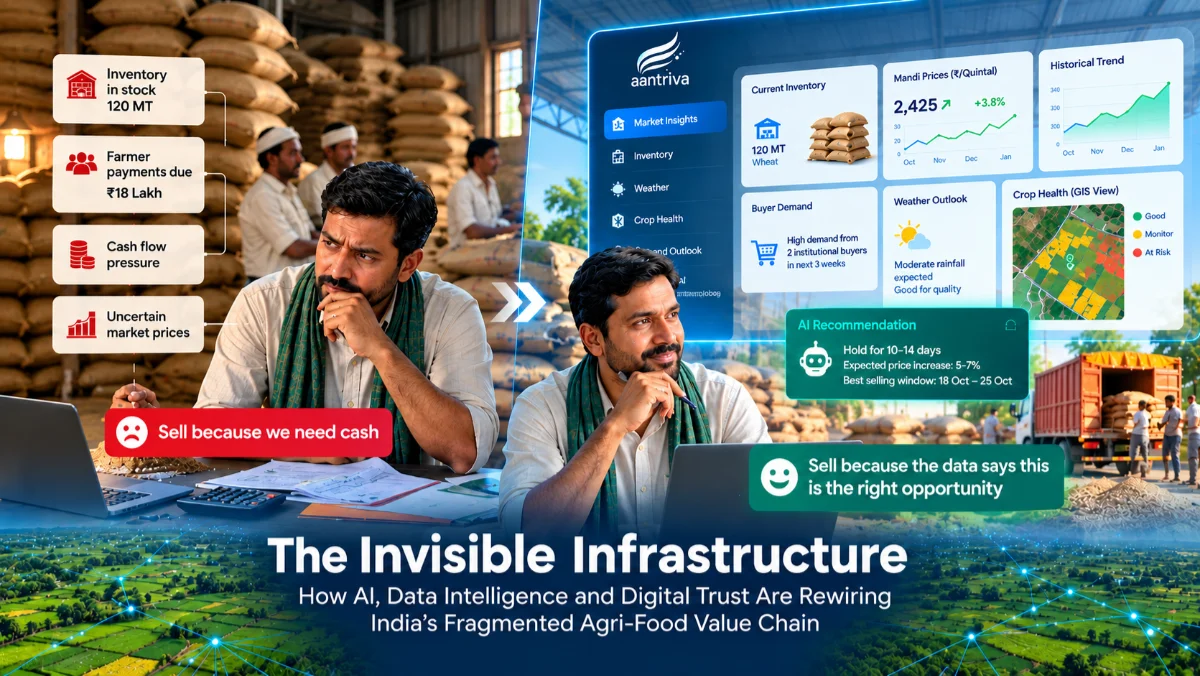
Consider an FPO holding several tonnes of produce after harvest. Holding inventory for a few weeks may help it secure better market realisations, but without sufficient working capital, the FPO may be unable to pay its member-farmers promptly. Lenders, meanwhile, may have limited visibility into the inventory, transaction history and cash flows of the FPO. The produce is then often sold based on liquidity needs rather than market opportunity.
This is not simply a credit problem. It is an information and trust gap in agriculture.
India has been building digital infrastructure to address this challenge. Initiatives such as the Reserve Bank of India’s Unified Lending Interface and digital warehouse systems are helping make financial and commercial information more accessible and verifiable. These developments can improve the ability of lenders to assess borrowers and assets that were previously difficult to evaluate.
However, better access to data does not automatically translate into lending confidence. Agricultural businesses operate with seasonal cash flows, fragmented records and limited formal transaction histories, particularly across Tier-2 and Tier-3 markets. The challenge is therefore moving from data availability to data intelligence and trust.
This is where the role of integrated commercial networks becomes important.
Ayekart has been building this layer since its inception. Its technology-driven agri-food network connects farmers and FPOs with buyers, processors, retailers and financial institutions, while its technology platforms create structured transaction and operational data across the value chain.
Its AI-enabled platform, Aantriva, is designed to bring greater intelligence and visibility across the agri-food value chain. Built on Ayekart’s on-ground experience and data, Aantriva uses signals including weather, prices, GIS and policy information to support market linkages, price discovery and decision-making. For financial institutions, verifiable transaction trails and merchant-network visibility can provide additional signals for risk assessment.
The larger opportunity lies in connecting these layers: commercial activity generates data, data creates intelligence, and intelligence can strengthen trust and access to finance.
For an FPO, this can change the nature of a seasonal financing constraint. Better visibility into inventory, transactions and market opportunities can provide greater flexibility to hold produce, access working capital and make selling decisions based on market conditions rather than immediate liquidity needs.
The future of India’s agri-food value chain will therefore depend not only on building digital infrastructure, but on embedding that infrastructure within trusted commercial networks that can turn fragmented economic activity into information that institutions can understand, assess and act upon.
That is where AI, data intelligence and digital trust can become more than technology. They can become part of the infrastructure that makes India’s agri-food economy more connected, transparent and financeable.
